Introduction
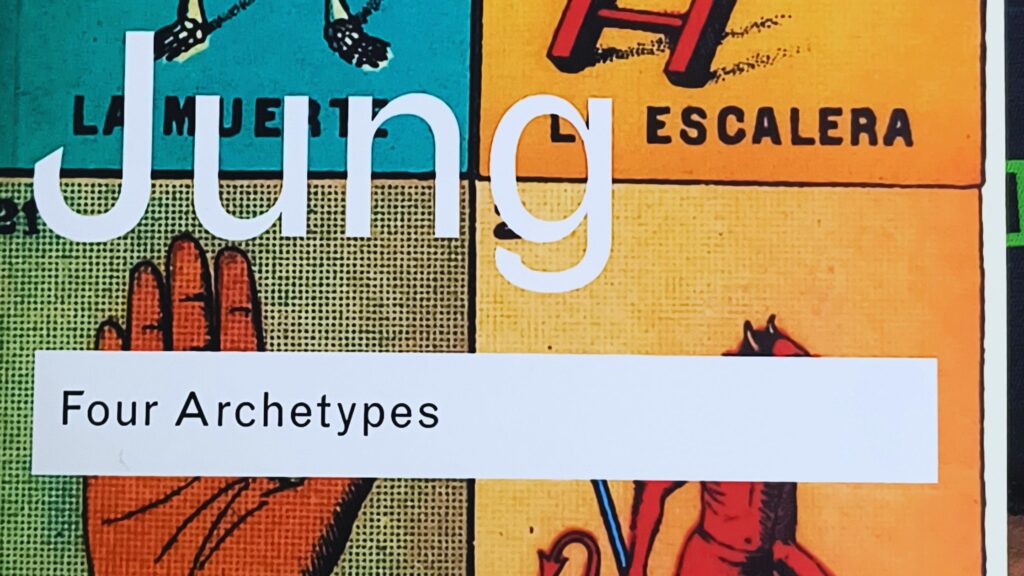
Four Archetypes by Carl Jung explores the hidden patterns that govern human behaviour. Carl Jung was one of the most influential Swiss psychiatrists of the 20th century. His framework, ideas, and theories are popular for their scope and scale. The book is a compilation of Jung’s essays and provides an overview of the archetypes.
About the Four Archetypes by Carl Jung
The book is a curated anthology comprising 4 essays. The narrative is not linear as the book is divided into 4 parts or chapters. Therefore, you need prior knowledge to better understand the book’s concepts. You can start by exploring the collective unconscious as the foundation of your research.
The 4 archetypes covered:
- Mother
- Rebirth
- Spirit
- Trickster
1. Mother
It is one of the most significant and complex archetypes in Jungian psychology. The book explores the mother complex and its dual nature. Moreover, Jung makes several cross-cultural comparisons based on religious and traditional imagery.
The dual nature of the Great Mother:
- Nourishing
- Devouring
2. Rebirth
This chapter explores the psychological transformation and personal development of the individual. The rebirth is a common term across different cultures and religious dogmas. Furthermore, this archetype is based on the enlargement of personality, which comes during some stage of human existence. If the personality is not transformed in the right direction, it can take a turn for the worse.
3. Spirit
The spirit archetype is depicted as the collective unconscious in Jung’s essays. It showcases the group and can be a force for good or bad. The prime example is the repressed spirit archetype, which led to the rise of Nazism. Hatred and anger fueled the collective unconscious, leading to the malignant and horrendous acts.
4. Trickster
The final chapter or essay in the book explores the trickster across mythology and history, as the name suggests, the trickster advocates for the collective human shadow. It is invited into one’s consciousness through hubris and ultimately leads to one’s downfall. However, you need to realise that there’s a distinction between the trickster archetype and the individual shadow.
Examples:
- Loki
- Coyote
- Joker
Final Thoughts on Four Archetypes by Carl Jung
Four Archetypes by Carl Jung examines key patterns governing human behaviour through a series of essays. The compilation is divided into four parts: Mother, Rebirth, Spirit, and Trickster.
The Mother archetype discusses its dual nature of nourishing and devouring, providing cross-cultural comparisons. Rebirth focuses on psychological transformation and personal growth, emphasising the need for positive development.
The Spirit archetype reflects the collective unconscious, highlighting both constructive and destructive outcomes, as seen in its role in Nazism. Finally, the Trickster explores its historical and mythological significance, representing the collective shadow and the consequences of hubris.