
Introduction
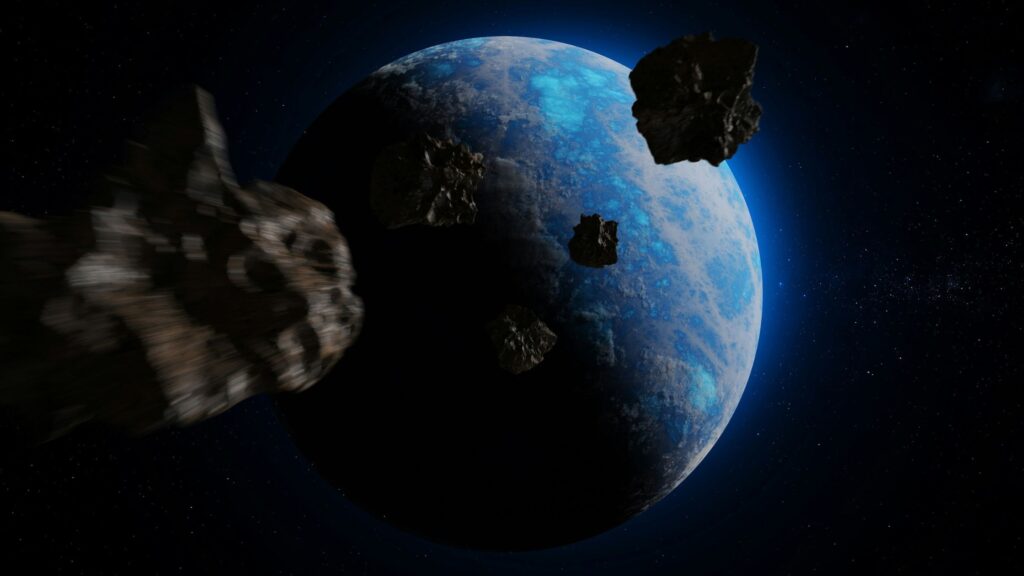
Millions of years ago, a rock from space wiped out the dinosaurs on planet Earth. This big rock is called an asteroid; it is still a threat to civilisation. The unpredictable orbits of asteroids make them a global-level threat. That is why initiatives like Asteroid Day aim to create awareness about these uncertainties of space and time.
What Is Asteroid Day?
Recognised on June 30 annually, the day aims to raise awareness regarding the outer space threat. You can find resources, published articles and videos on the official platform. The annual event and programs take place in the last week of June. So, if you’re interested in space topics, this is a great opportunity for you!
Asteroids in Astronomy
Asteroids are small planetary objects floating through space. They are formed during different events, such as collisions and during the early universe. Asteroids are primarily differentiated based on their size and other orbital information.
Types:
- C
- S
- M
Asteroids have the potential to wipe out entire civilisations. That is why scientists often track and classify them based on their threat level. Currently, we don’t have technology to tackle the issue and can only hope for the best.
Notable Asteroid Events in History
Asteroid impact is common in the universe. We don’t know how many times Earth has been hit by an asteroid. The most notable and biggest impact wiped out the dinosaurs. Also, there have been many close calls in the past as well. This means it is a continual threat to human civilisation.
- The Tunguska Event, 1908
- The Chelyabinsk meteor, 2013
- The Chicxulub impactor
Is Asteroid a Real Threat?
Asteroid impact is a threat to human civilisation. It might not happen often, but it can cause catastrophic damage to us. The impact depends on the size of the asteroid and the location where it hits the planet.
Potential threats:
- Apophis
- Bennu
Planetary Defense for Asteroid
Before developing asteroid-destroying technology, we need better tracking systems. We can’t destroy the asteroid that we don’t see coming. That’s why it’s crucial to develop tools for timely detection. This way, we can further deal with the problem.
Deflection methods for asteroids:
- Kinetic impactors.
- Gravity tractors.
- Nuclear options.
How Asteroid Day Is Celebrated Around the World
The day is mostly focused on space programs and highlighting the latest research. You can learn about the events and attend lectures offline. There is a social media presence of the cause, which can be viewed via live streams.
You can attend the event or even host your local events. If you’re a group of space enthusiasts, it is an opportunity to discuss the universe. Moreover, you can dive into technologies for tracking the asteroid and see how they work. It is quite a significant learning experience for everyone involved!
Asteroids as Opportunity!
With proper technologies, asteroids are potential resources. The largest asteroid comprises many crucial elements. These can not only provide information about the universe but are also utilised for fulfilling energy demand. Moreover, scientists can learn about the origins of life in the universe with a quality sample size.
Final Thoughts on Asteroid Day
Observed annually on June 30, it raises awareness about the potential threats posed by asteroids, which have previously caused significant events like the extinction of dinosaurs. Asteroids are categorised based on size and orbit, with scientists tracking their movements to assess risks.
Notable historical impacts include the Tunguska Event and the Chelyabinsk meteor. While current technology does not enable asteroid destruction, improving detection systems is essential for planetary defence.