

Introduction
In a world of hyperconnectivity, the digital detox has emerged as a possible solution to burnout. It is a temporary illusion that fails to acknowledge the reality of the modern world.
The Reality of Digital Detox
We are living in the age of the scroll. Gadgets are with us from the moment we wake up to the blue light that helps us sleep. Although technology has made information more democratic, it has also brought a novel set of psychological issues.
- Notification fatigue
- Doomscrolling.
- Shortened attention span.
The idea of a digital detox, the deliberate act of being offline and leaving electronic devices at least once a day, has ceased to be a niche wellness tactic and has become a popular topic.
But is it actually effective? Some would state that a period of temporary withdrawal is a necessary need to heal the nervous system, and others would state that detoxing is a myth that does not solve the problem of our relationship with technology.
We have to go off-screen to discover the answer: whether digital detox is a myth or a necessity?
What Exactly Is a Digital Detox?
A digital detox is a period when a person refrains from using electronic devices, such as smartphones and laptops, and social media. The concept is to relieve stress, reconnect with the real world, and eliminate a loop of dopamine-induced feedback.
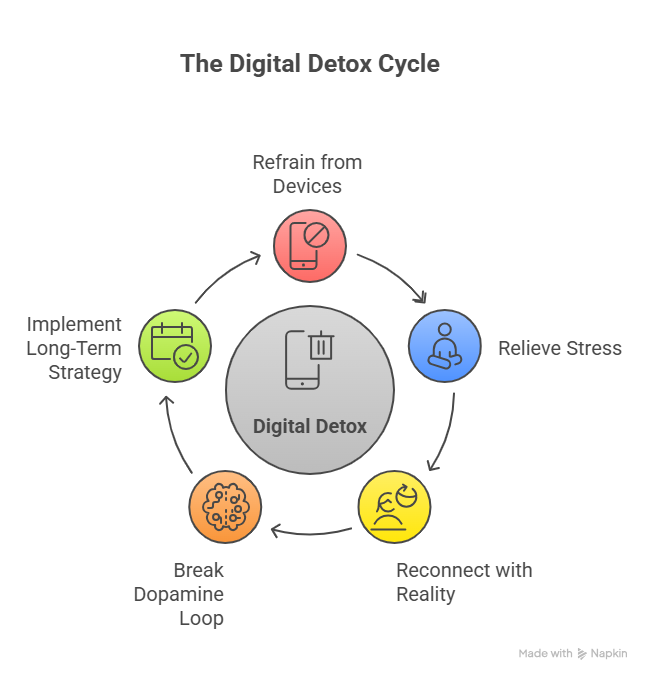
Yet the myth element is created when individuals take it as a juice cleanse, which is a singular procedure to flush out toxins, then go back to their previous bad habits. To make a digital detox a necessity, it needs to be a long-term strategy rather than a short-term one, in line with becoming a digital hygiene system.
The Biological Necessity: Your Brain on “Always On”
The main case discussed the need for a digital detox, grounded in neuroscience. Modern smartphones send a massive amount of stimuli, which our brains were not designed to process.
1. The Dopamine Trap
Social media platforms are designed with variable rewards, which is the exact psychological mechanism at work in slot machines: every like, share, or comment triggers the release of dopamine. As time goes by, we develop a tolerance in our brains, and it takes an entire detox to restore the same level of satisfaction in these reward pathways.
2. The Stress Response and Cortisol
The continuous alerts leave the brain in a high alert state, or in other words, switch-tasking, and this increases cortisol levels- the primary stress hormone in the body. Continued high levels of cortisol cause:
- Fragmented concentration.
- Sleep of poor quality (disturbance of melatonin).
- More irritable and technostressed.
Is the Detox a Myth? The Case for Digital Integration
Articles opposing the digital detox movement argue that the term itself is a misnomer. Technology is a part of contemporary existence, professional advancement, and societal organisation, rather than biological toxins.
The Problem with “All or Nothing”
The myth is in the notion that you can or need to be totally disconnected. Being without a phone during the weekend is an extravagant experience for many people. Remote workers, parents, and freelancers depend on connectivity. By putting the solution in terms of quitting, we position ourselves to fail and experience digital guilt.
Digital Minimalism vs. Digital Detox
Rather than a short-term detox, such professionals as Cal Newport recommend Digital Minimalism. According to this approach, the need does not lie in being out of the digital world, but to live actively there. When you go a week without the plug and come back to the same disorganised notification settings, then the detox was a lie; nothing really changed.
The Long-Term Verdict: Necessity wins, but with a Twist
Is there such a thing as a digital detox? The solution/response is that periodical disconnection is a biological need; however, the all-or-nothing methodology is a myth.
- We cannot live outside the digital world, and we should not desire to do so, as it has unbelievable advantages. We need to manage our attention as a valuable but limited resource.
- A digital detox should not be a single event but a gateway to Digital Literacy. It is learning to employ your phone as a means, but not being employed by it.
- The actual detox is the understanding that your life is lived in this physical place where you are, and that a feed does not hold the most valuable updates, but ideas in your own mind and with your tablemates.
Final Thoughts on Digital Detox
In the end, the digital detox is about recovery. It is the act of shutting the noise in such a way that you may hear your voice once more. When you take a step back, you do not lose the world; you see it better. As the digital and the visceral come into balance, you change the game of surviving the information era not only to survive it, but also to flourish.