

Introduction
Nowadays, as information never stops and knowledge doubles at the blink of an eye, efficient reading and learning are more valuable than ever. Whether you’re a student, a professional, or a lifelong learner, learning to read faster and absorb more information can change how productively and confidently you work.
Luckily, artificial intelligence (AI) has improved our reading experiences and enabled smart applications that help us learn more quickly and interact with the text more deeply. In this article, we will discuss the best AI tools for readers that can help them derive greater value from any page. We will deconstruct what makes each app unique and how it can help you read smartly, without complication.
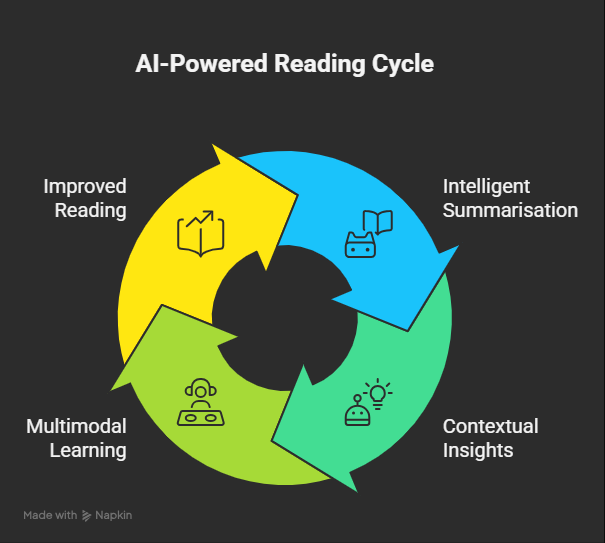
Why AI Matters for Reading and Learning
It is important to comprehend the way AI can improve reading before getting into the best apps:
1. Intelligent Summarisation
With the help of AI, it is possible to summarise long articles or chapters and present a brief but accurate summary of the content without missing the main points.
2. Contextual Insights
More complex concepts or context (definitions, history, images) can be explained using advanced algorithms within the flow of the reading.
3. Multimodal Learning
Some apps are audio, visual and interactive, and your brain is receiving information in more than one channel. Concisely, AI simplifies, improves and renders reading more interesting.
Top AI Tools for Readers
Let’s explore the must-try tools that are reshaping the reading experience:
1. Scribd AI Reading Companion
Scribd’s AI assistant can summarise articles and books in a second. This is the best tool for a cafeteria that doesn’t take much time to read.
Highlights:
- Generate chapter summaries
- Elaborate on important concepts.
- Spend less time with intelligent suggestions.
Why it’s great:
Even long books are easy to read without flipping through every page, and time-saving can be especially helpful for students or busy professionals.
2. Blinkist: Big Ideas in Minutes
Blinkist summarises nonfiction books in short, digestible bits called blinks that can be read in about 10 to 15 minutes.
Features:
- AI-generated explanations of the most popular nonfiction books.
- On-the-go learning in audio form.
- Intelligent suggestions based on interests.
Best for:
Time-starved students who prefer to stay up to date without carrying bulky books are a perfect match for commuters or multitaskers.
3. Readwise: Retain What You Read
Readwise enhances retention using spaced repetition and AI-curated highlights.
What it does:
- Gather and organise your highlights from Kindle, Instapaper, Apple Books, and PDFs.
- Turns indicating flashcards.
- Relies on spaced repetition to increase memory.
Why readers love it:
It is not all about reading rapidly; it is about retaining what you read. This will be used to convert passive reading into active learning.
4. Accelerated Reader Tools: Speed Reading AI
Applications such as Reedy and Spreeder use AI to speed up reading through guided pacing.
How they help:
- Currently displayed in a rapid-serial visual presentation (RSVP) format.
- Get your eyes to read more quickly.
- Enhance concentration and remove subvocalisation.
Who benefits most:
Those with good reading comprehension, but require a massive boost in speed, e.g., in academic research or a large reading list.
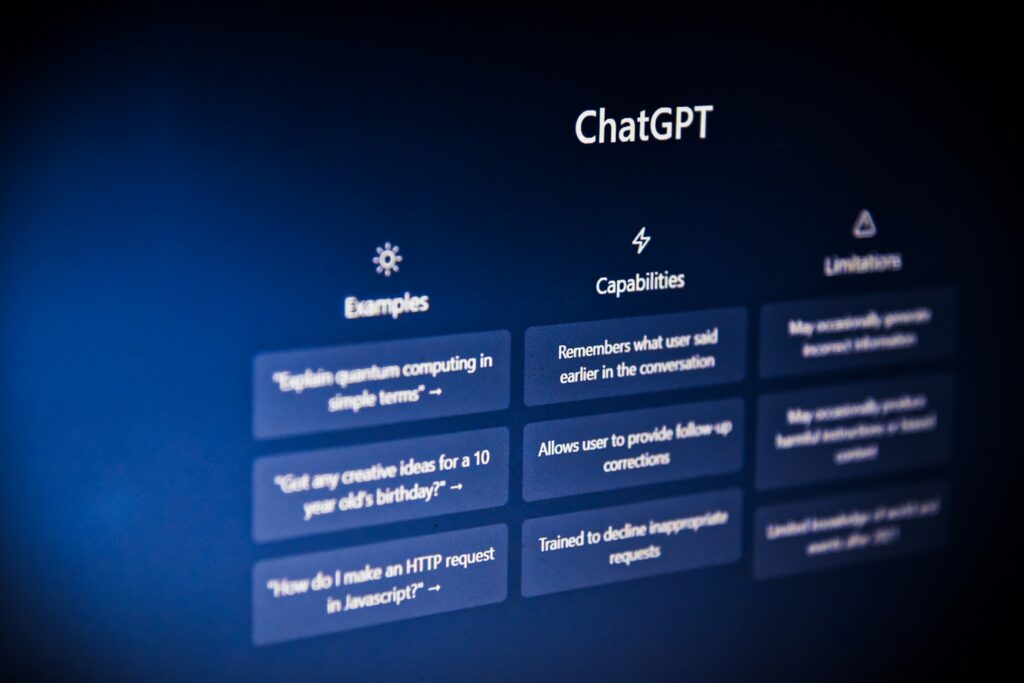
5. ChatGPT: Your Conversational Reading Coach
ChatGPT, an OpenAI-developed project, has become the ultimate reading companion capable of personalising the learning process.
Key Uses:
- Write summaries or define complicated issues in simple terms.
- Prepare quizzes or flashcards out of what you are reading.
- Text to language translation.
Why it’s powerful:
ChatGPT will adjust to your learning style and assist you in comprehension of even the most incomprehensible passages.
6. Scholarcy: Perfect for Research Papers
Scholarcy is an artificial intelligence research assistant that summarises scientific articles and reports.
What it offers:
- Key points are extracted automatically.
- Citations of research objectives, research procedures, findings, and limitations.
- Citation exports
Best use case:
Scholarcy will be essential to students, academics, and professionals who are bogged down by complex studies that must be digested quickly.
7. Perplexity: Intelligent Search and Summarisation
Perplexity combines search and AI-generated summaries.
Uses:
- Request clarifications and receive brief responses.
- Overview web pages, PDFs, podcasts and so on.
- Search topic overviews and related links.
Why it’s useful:
Exploratory learning is when you are in a hurry and do not want to spend hours browsing dozens of sources.
Final Thoughts on AI tools for Readers
In a world awash with information, being a quick and effective reader is a superpower, and AI is helping make it accessible to all. AI reading applications can be used by all kinds of learners, whether reading a dense book in a few minutes or simply remembering what they read.
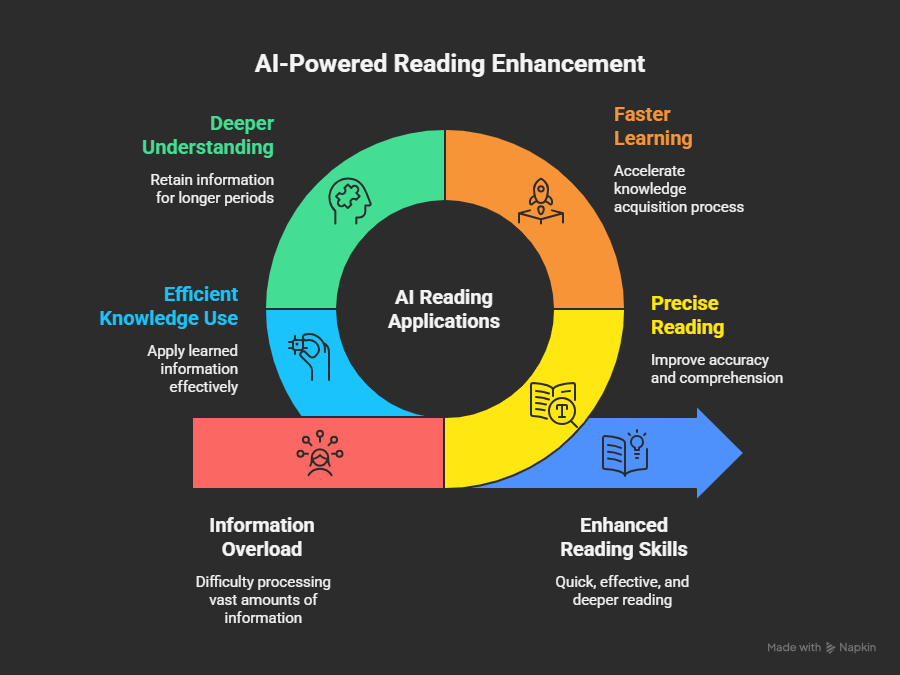
These artificial intelligence tools can make you read more precisely and learn more quickly. It is not about reading more at the end of the day but about reading deeper, remembering longer, and putting the knowledge to more efficient use. We are finally making that a reality with the right AI tools.