
Introduction
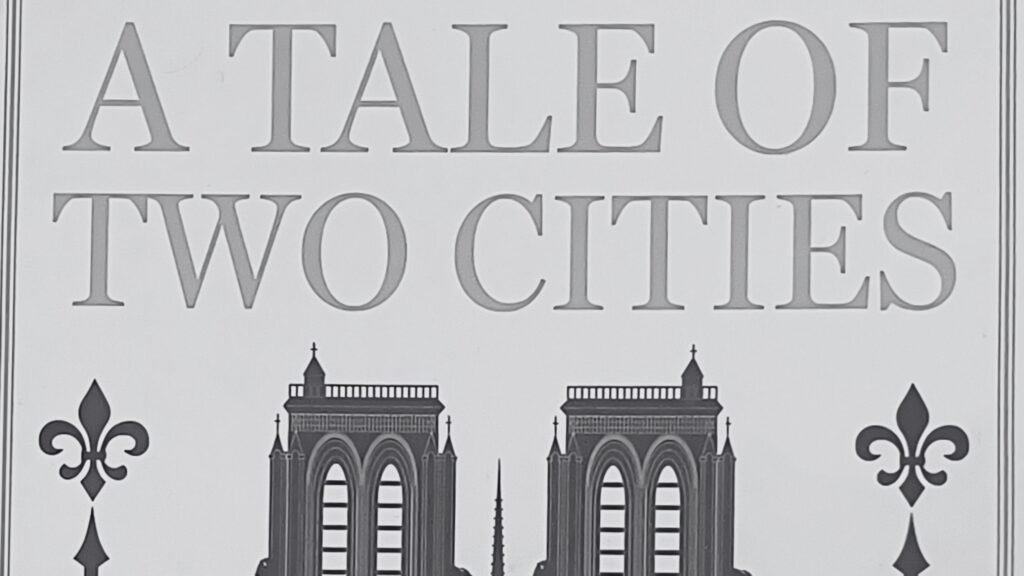
A Tale of Two Cities by Charles Dickens is a novel set during the French Revolution. The story revolves around multiple characters who are stuck in the aftermath of the revolution. It is one of the most notable works of Dickens and my first read of the author. So, let’s look into the different aspects of the book and what we can take away from the story.
French Revolution Setting
The story is set during the French Revolution. It takes into account the start, middle, and last phases of the revolution. Moreover, the role of the revolution is to provide a strong base for the story that relies on love, drama, and sacrifice.
“A wonderful fact to reflect upon, that every human creature is constituted to be that profound secret and mystery to every other.”
For me, the story works on so many different levels. Without spoiling the major plot of the book, I will say that it is a well-written piece of literature. The language and intricate dialogue take you to 18th-century France and England.
Story Is Spread Over a Decade
The entire narrative is an account of several years. You’re introduced to some main characters, their goals, and actions.
Then the narrative shifts a few years, where the characters are already established in their world. This happens a few times in the entire book and can be confusing. However, most of the characters are involved and related to each other’s story.
“It is a far, far better thing that I do, than I have ever done; it is a far, far better rest that I go to than I have ever known.”
I noticed the use of subtle details and plot secrets that came to light later in the book. These were a great addition to the overall plot and the message it tried to convey.
Complex Detailing of a Simple Story
The story is simple when you read the summary. However, in the novel, the level of detailing and secrecy is exceptional. You know what is happening, but at the same time, you can’t predict what will happen in the plot.
“It was the best of times, it was the worst of times.”
This level of complexity is something that is only present in a few books. I had a great time understanding not only the story but the setting of the French Revolution and what it meant.
A Satisfying but Brutal Ending
The ending of A Tale of Two Cities by Charles Dickens is a tragedy. It showcases the selflessness of a character who had nothing. Still, he made a choice that kept others safe and prioritised their lives. In a way, it was the best act done, which had the worst outcome.
“It was the best of times, it was the worst of times.”
The ending resembles Christ’s sacrifice for humanity. Ultimately, Dickens wanted to set a story which had this religious structure ingrained during the revolution. However, the character he chose resembled nothing like a virtuous man. But this one act redeemed his entire life.
Final Thoughts on A Tale of Two Cities By Charles Dickens
It is a book about love and sacrifice. You can find the ultimate Christian theme taking place in the entire narrative. Moreover, there are also themes about greed, justice, and nobility. In general, the book is a complete collection of various human emotions, actions, and outcomes.
“It was the best of times, it was the worst of times.”
Thus, you should read the book as soon as possible. I had some doubts on my first read, but with some video essays, I realised the depth of this masterpiece by Charles Dickens.
FAQs
What is the length of A Tale of Two Cities?
The book has around 480 to 500 pages depending on the publisher.
How long does it take to finish the book?
It will take an average reader with a normal reading speed around 10-12 hours to complete the book.
What is the reading level of the novel?
A Tale of Two Cities is a long book that requires an above-average reading level for proper understanding.