
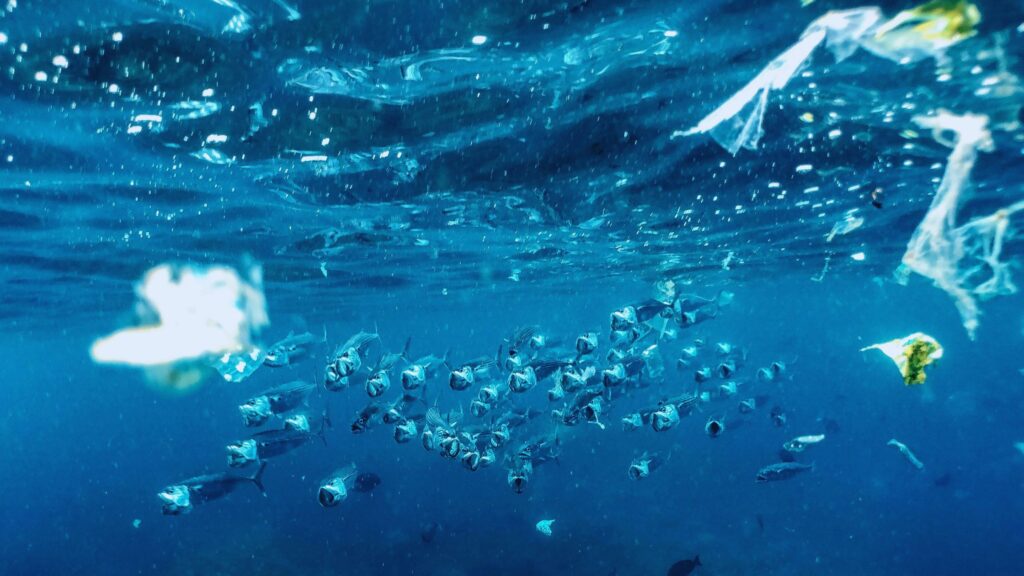
Pollution is one of the world’s biggest challenges. Human waste and non-recyclable materials often end up in nature. The oceans and river bodies are the biggest victims of plastics and corroding substances. One such place is the Great Pacific Garbage Patch— a vast area of debris in the North Pacific Ocean. So, let’s learn more about this palace and look into ways to tackle such a crisis.
The Great Pacific Garbage Patch
It is a floating collection of debris that affects the global ecosystem and damages the natural balance. Moreover, the garbage patch forms due to the convergence of different oceanic currents. Even though the name suggests the Pacific garbage patch is an island, it’s actually a significant accumulation of plastic waste in the water.
Components of the Patch
The two most notable components of the Pacific garbage patch are microplastics and larger debris. All this stuff comes from human activities and settles at specific places in the water. As a result, it makes it difficult for marine animals to survive in this area.
Some examples of plastic waste:
- Fishing gear.
- Tiny plastic pieces.
- Bottles.
- Ropes.
- Shoes.
How Does The Great Pacific Garbage Patch form?
The garbage patch stretches from the West Coast of North America to Japan. This is the region where plastic debris concentration is too high.
- Eastern patch: between Hawai‘i and California
- Western patch: near Japan
The North Pacific subtropical gyre is a current system that traps debris and collects it in one region. Over time, the quantity of debris becomes so high that it’s visible to the naked eye. Moreover, it disrupts the region’s natural order, rendering it inhospitable to marine life.
Ocean currents and gyres behind the garbage patch:
- California Current
- North Equatorial Current
- Kuroshio Current
- North Pacific Current
The source of trash is land, especially the point where the sea meets or enters the ocean. The debris is pulled into a gyre, which then carries it into the ocean. Thus, it’s a serious issue that requires more resourceful steps.
The Parameters of the Great Pacific Garbage Patch
It’s difficult to measure the patch’s size due to the floating depth. However, some estimates suggest the following parameters of the region, and it’s very concerning.
- 79,000 metric tons of plastic.
- Approximately 1.8 trillion pieces of plastic are there.
- The area is close to the size of Texas.
The Inside of the Great Pacific Garbage Patch
Over 80 per cent of ocean plastic comes from land. The rest is due to marine activities. Nonetheless, below is the estimated breakdown of plastics in the garbage patch.
- Microplastics (~94%) by piece count.
- Fishing gear and large plastics (~46%) (mass(weight).
The Persistent Development of the Great Pacific Garbage Patch
Since plastics do not biodegrade, the patch cannot naturally degrade. Even with processes like photodegradation, the plastic breaks into smaller pieces—microplastics. On the other hand, the dense debris sinks beneath the ocean’s surface or to the seafloor. Therefore, most of the plastic may be hidden underwater.
Environmental Impact of the Great Pacific Garbage Patch
Marine animals mistake plastics for food and, as a result, can even die from it. Some animals even die after getting stuck in ghost fishing nets. This is a serious concern, and it is not limited only to living animals. The entire ecosystem is prone to the problems caused by the garbage. It’s because plastics leach chemicals and enter the food web, which can even affect human health.
The Great Pacific Garbage Patch is Not a Floating Island!
The whole region is not an island but a cloudy water. You can’t walk on it, but you can see that debris exists. Moreover, satellite imagery cannot reveal small particles. So, no one can fully predict the severity of the situation as a whole.
Cleanup Efforts of The Great Pacific Garbage Patch
The ocean is over 70 per cent of the entire planet. It’s not an easy job to clean it. Also, the small size of plastic makes it difficult to clean. Even if you capture microplastics, there’s a chance you can harm plankton or other small sea life. However, it doesn’t mean all is lost, as organisations like the Ocean Cleanup are designingeffectivet systems to capture plastics in greater quantities.
Individual Role and Responsibilities
As a responsible citizen, you need to reduce single-use plastics. This includes bags, bottles, and straws. Moreover, you should support policies and organisations that are dedicated to marine conservation. Your small help can make a big difference in the future. Even if you can’t contribute money, spreading awareness about marine debris is also a great start.
Final Thoughts on the Great Pacific Garbage Patch
Pollution, particularly plastic waste, significantly impacts global ecosystems. The Great Pacific Garbage Patch is a massive concentration of debris in the North Pacific Ocean. This patch consists of microplastics and larger debris, primarily from human activities, making the area uninhabitable for marine life.
Although not a tangible island, the patch is a heavily polluted zone that is challenging to clean due to the tiny size of the plastic particles. Lastly, cleanup efforts are ongoing, and individual actions, such as reducing single-use plastics, can help mitigate the crisis.