

Introduction
When you shop online, there’s a chance you’ve noticed price discrepancies on the same product. This is not a bug or software error but a planned scenario. Companies often use advanced technologies to monitor your spending patterns and recommend products based on your interests. The more you spend, the more likely you are to pay higher prices for the same product than someone else. It is called surveillance pricing. So, let’s explore the situation further and how it leads to unfairness in the world of ecommerce.
Surveillance Pricing in Data-Based Consumer Markets
Companies track your data, behaviour, and shopping interests over time. It helps them to recommend new products on your feed. However, that’s not all they track—they also track the money you spend and the transaction histories as well. This gives them an idea about how much you are willing to spend on a given product.
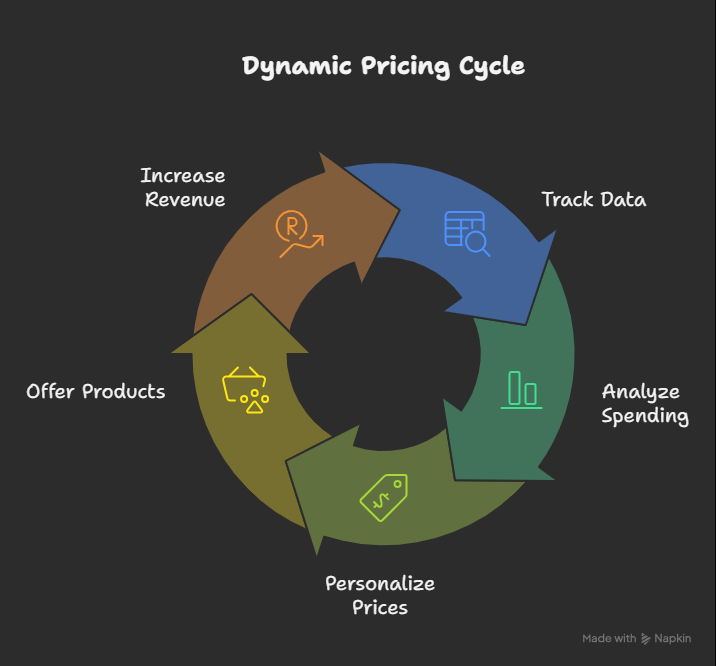
There’s a chance that you will pay more for item A than the next customer. This means the price you’ll see on the product will be more. Now, you must be wondering about the unethical nature of such practice. Yes, this is unfair, but it happens all the time in online stores.
So, how can you find the best and most reasonable prices? The answer is to become a better online shopper using tools that protect your data and personal information.
Data Sources Backing Surveillance Pricing
Online stores and companies have many sources to find relevant user data. It includes storing cookies on the devices. Analysing purchase patterns and even contacting third parties. All these efforts can save the firm substantial money. And that’s why companies constantly monitor prices.
The sources for your data:
- Browsing history.
- Location data.
- Device type.
- Purchase patterns.
- Third-party data brokers or providers.
Personalised Shopping Leads to Price Discrimination
The companies utilise the concept of personalised shopping. In theory, everyone wants their feeds personalised. But it’s also a way to apply custom pricing to the same product for different users. As a result, it leads to price discrimination, which is not ethically based on a functional economic practice.
Ethical Reality of Pricing
The morality of surveillance pricing is in the grey areas. The majority of customers don’t want to pay more for the same product than others. However, in some cases, specific individuals have no problem with the prices. They are well-off, and it doesn’t affect their wallets. Therefore, it leads to grey areas, as some people prefer products to prices.
Demographics Facing The Repercussions of Surveillance Pricing
The chronically online individuals who shop regularly are the primary victims of surveillance pricing. The companies know everything about their whereabouts, budgets and spending habits. In this way, they are most prone to price discrimination on the same products.
Need for Legal and Regulatory Responses
To tackle issues of surveillance pricing, there must be proper rules and regulations. Limiting the cap on products is not the solution. However, transparency in pricing can make online shopping more transparent. It allows the customers to compare the prices and get the best products.
For a long-term, sustainable shopping experience, showcasing the truth is the only way forward. Again, it can only happen when the authorities are willing to take a stand against the big corporations.
The Role of Firms for Fair Prices
The companies also need to understand that everyone loves fairness and transparency. Once you give your customers these traits, they become your lifelong supporters. And it all starts with the fairness of prices and nothing more.
How to Protect Yourself as a Consumer from Digital Pricing?
Surveillance prices are inevitable. But it doesn’t mean youare likely to pay more for your desired product. There are ways in which you can save your hard-earned money. This will help you become a better, more aware customer in the long run.
Save your money during online shopping with the following methods:
- VPNs.
- Privacy tools.
- Using multiple devices for shopping.
- Comparing prices before purchase.
Future of Shopping In a Data-Based World
If you shop online regularly, then you have to become a better navigator. There are many different ways you can be exploited as a user or customer. Therefore, it’s better to compare prices both online and offline. This way, you can get the most reasonable price for your desired product. At the same time, it’s crucial to raise awareness among your friends and family about such practices so they’re not ripped off!
Final Thoughts on Surveillance Pricing
Surveillance pricing is a practice in which online retailers monitor customers’ spending habits and behaviours, leading to price discrepancies for identical products. Companies track various data, including browsing history and purchase patterns, to deliver personalised shopping experiences that may result in price discrimination. This ethical dilemma affects frequent online shoppers the most, as they face higher prices based on their perceived willingness to pay.
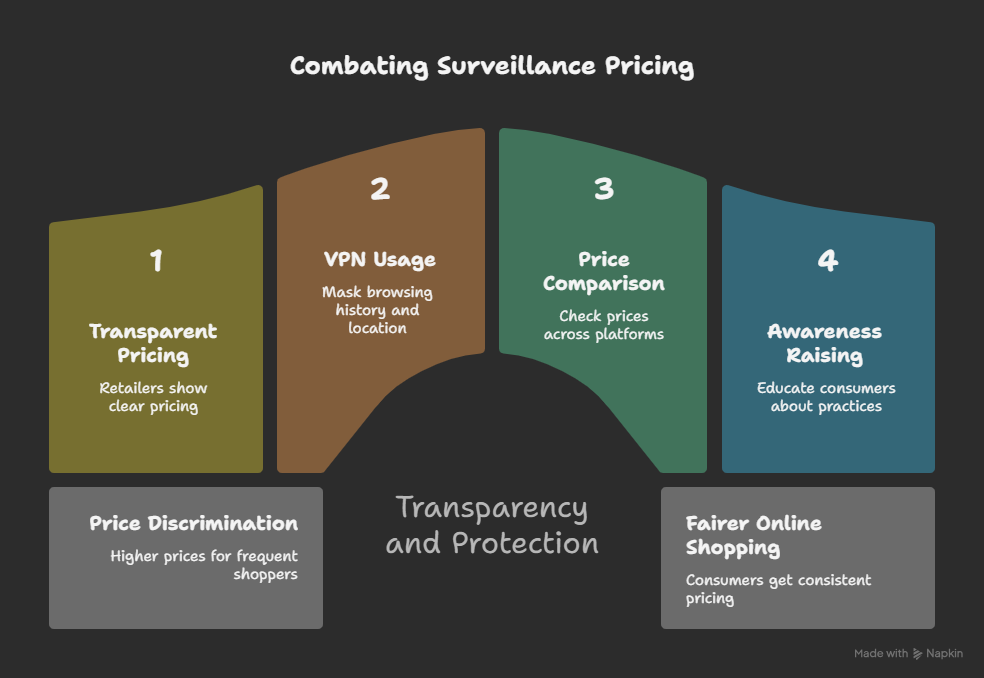
While transparency in pricing is recommended to combat this issue, consumers can also protect themselves by using VPNs and privacy tools, as well as by comparing prices across multiple platforms. Raising awareness about these practices is essential for fairer online shopping experiences.